
Seven causes of drip irrigation failure.
Most drip systems that disappoint, in a hotel's flower beds or along a farm's rows, do not fail all at once. They drift: some beds or rows get less water, then some get none. These are the seven causes we look for.
The seven causes
The pictures below are illustrations of each fault, not photographs of an ASFA IRRIGATION NG project.
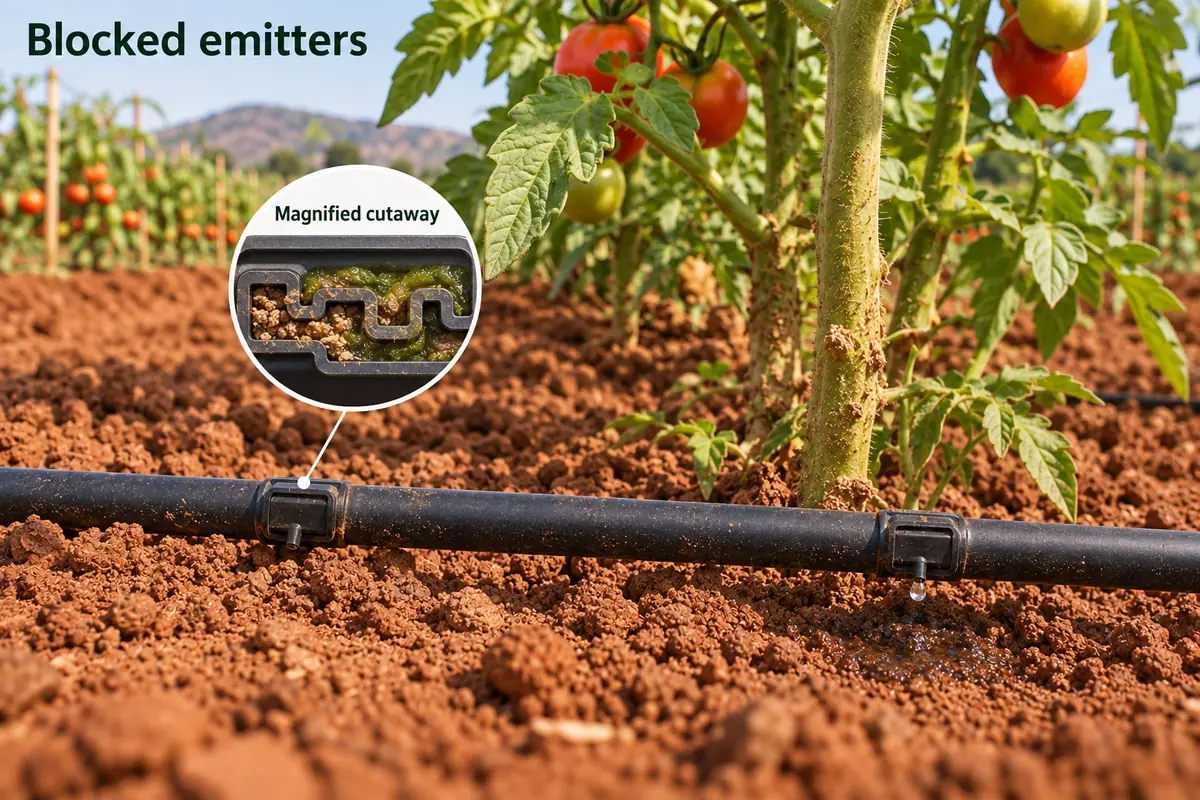
Blocked emitters
Sand, silt, algae or mineral scale block small outlets. Good filtration, matched to the water, is the first defence.
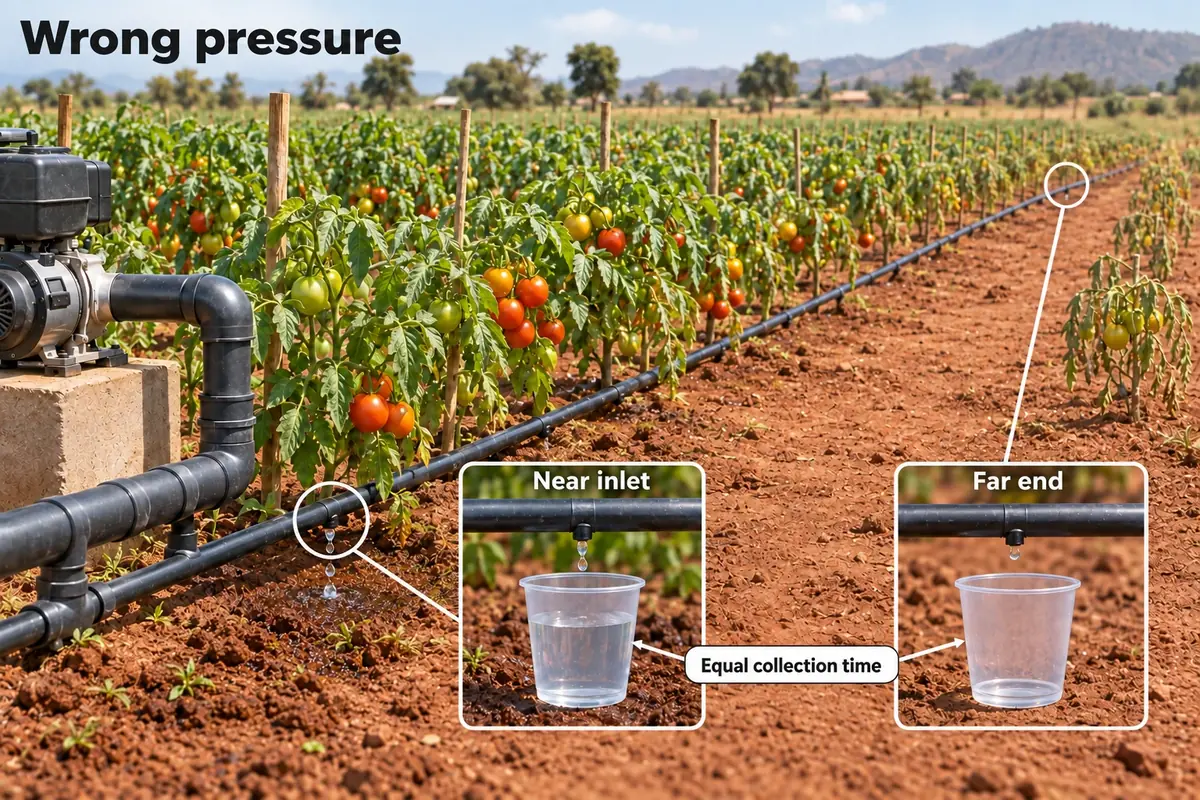
Wrong pressure
A network designed without the hydraulics worked out gives the beds or rows near the pump too much water and the far ones too little.
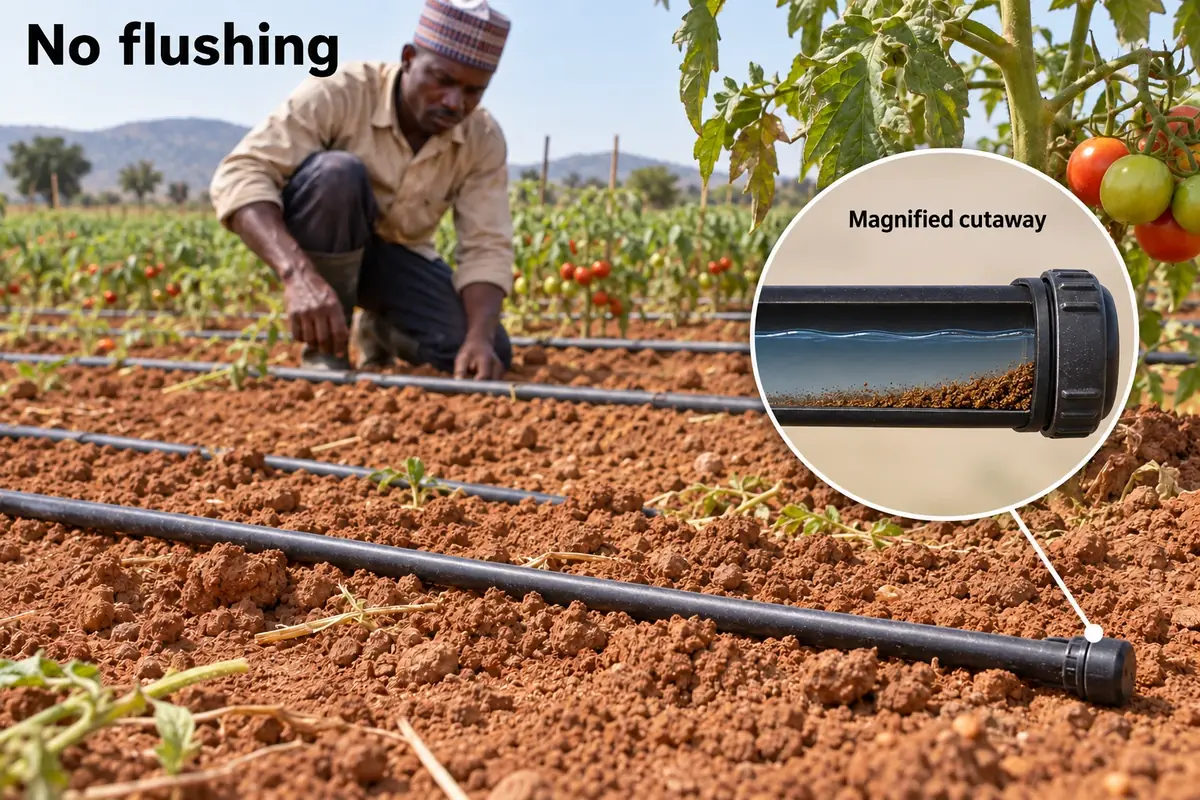
No flushing
Dirt collects at the ends of the lines. Lines and mains need to be flushed on a routine.
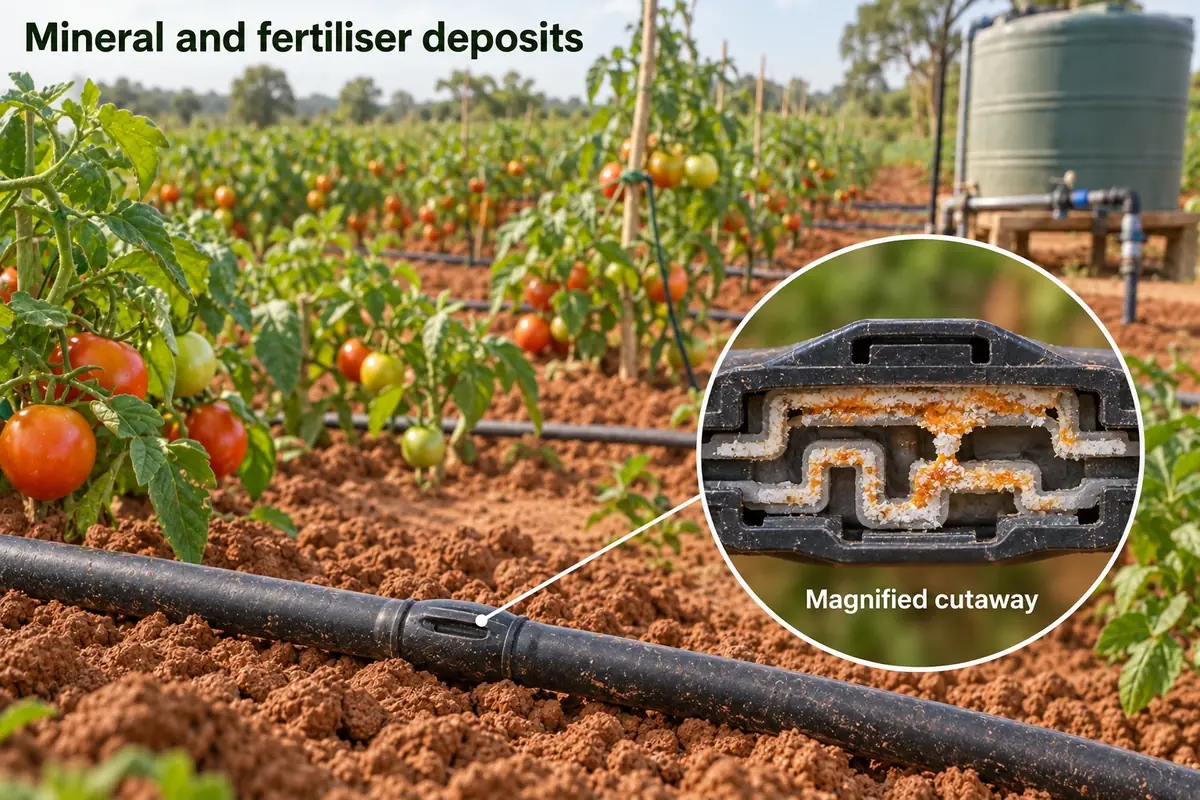
Mineral and fertiliser deposits
Iron and calcium in the water, or fertiliser that reacts with it, can coat and block the system.
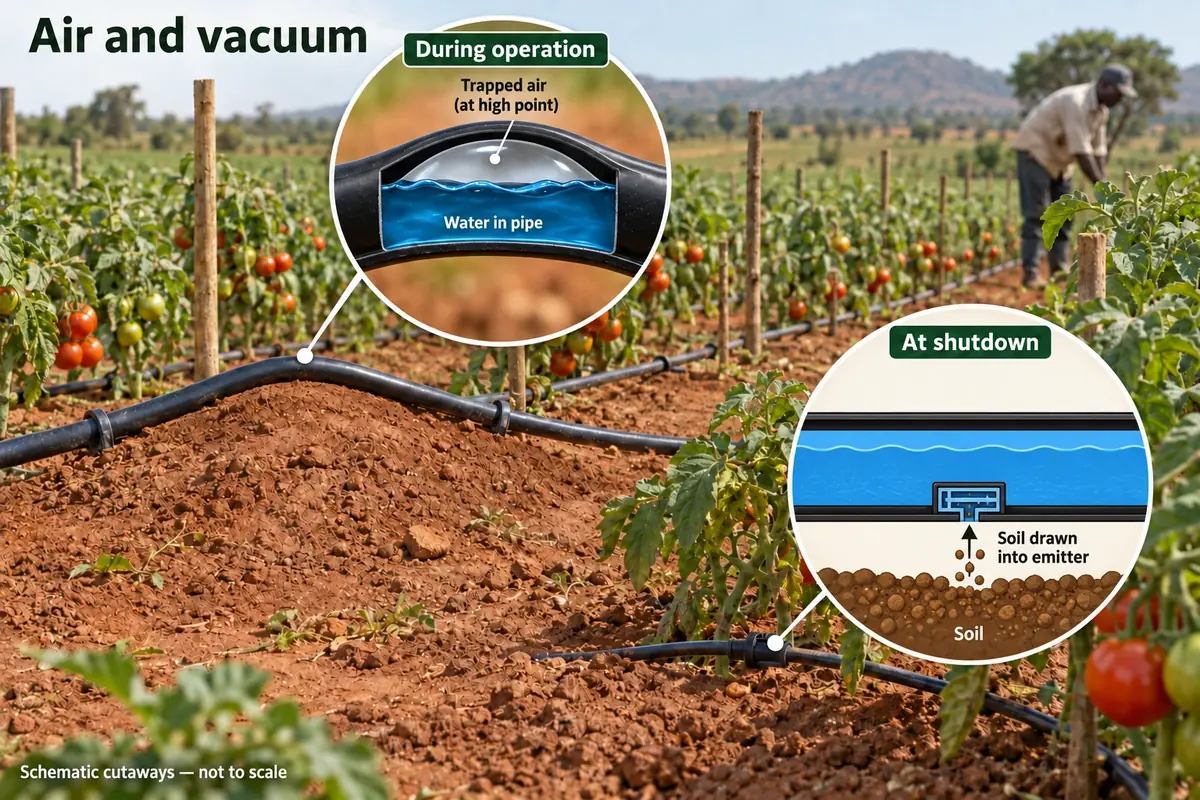
Air and vacuum
Without air valves, trapped air disturbs flow, and a vacuum can pull soil back into the emitters.
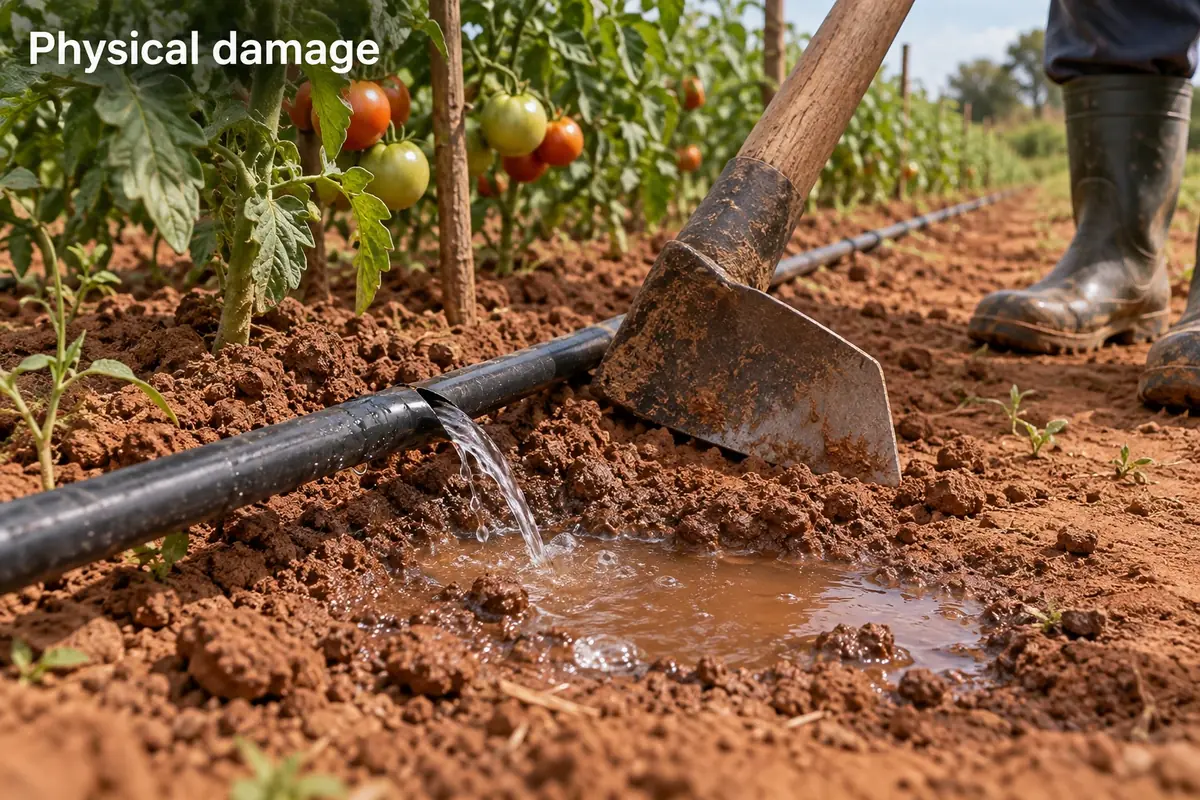
Physical damage
Rodents, hoes and spades, mowers and strimmers, foot traffic and sun can cut or crack pipe and drip line. In a garden, drip line kept under mulch is out of the sun and out of the way.
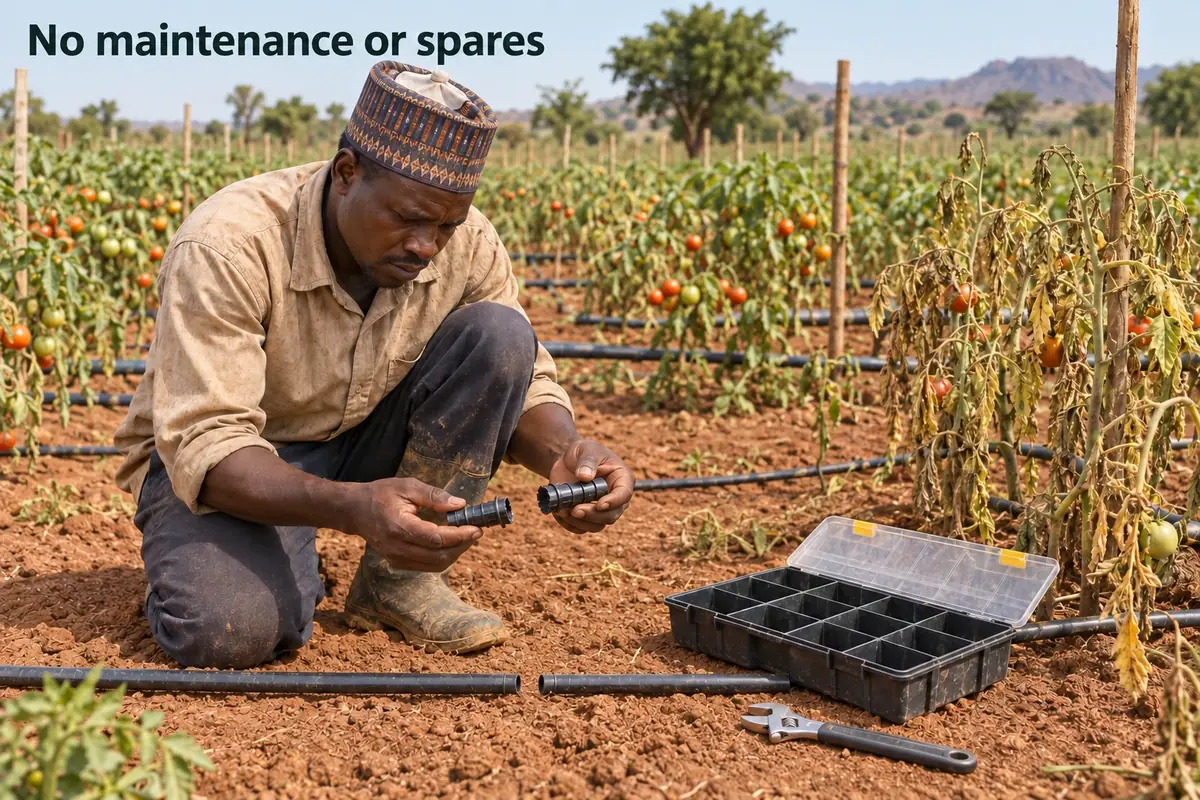
No maintenance and no spares
Without a routine and spare parts, a small fault stays a fault.
What prevents most of them
A design that works out the hydraulics, filtration that suits your water, careful installation, and a maintenance routine that someone owns. Choosing products that last, and having parts and support available, matters as much as the design.
See landscape irrigationSee farm irrigation
Is your system uneven?
Tell us what you see, through the form or on WhatsApp, and we will say what to check.